A Very Brief Overview of Barfieldian Philosophy
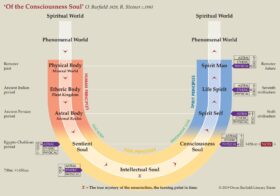
- Human consciousness and language evolve simultaneously
- The Enlightenment and its corollary (scientific thinking) marked one of the major changes in the evolution of human consciousness and, consequently, in the way humans think and perceive the world around them
- In order to think scientifically, previous ways of thinking had to be effectively eliminated – and they were
- Due to scientific thinking, Western societies have entered into an unprecedented era of material wealth. This same thinking, however, has led to a correspondingly unprecedented number of mental health, environmental, social, and individual problems
- To address the problems facing our world, a new way of thinking is indeed emerging
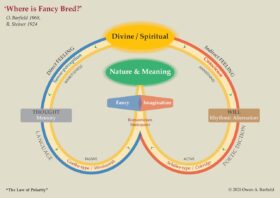
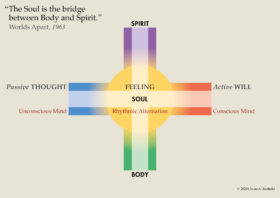
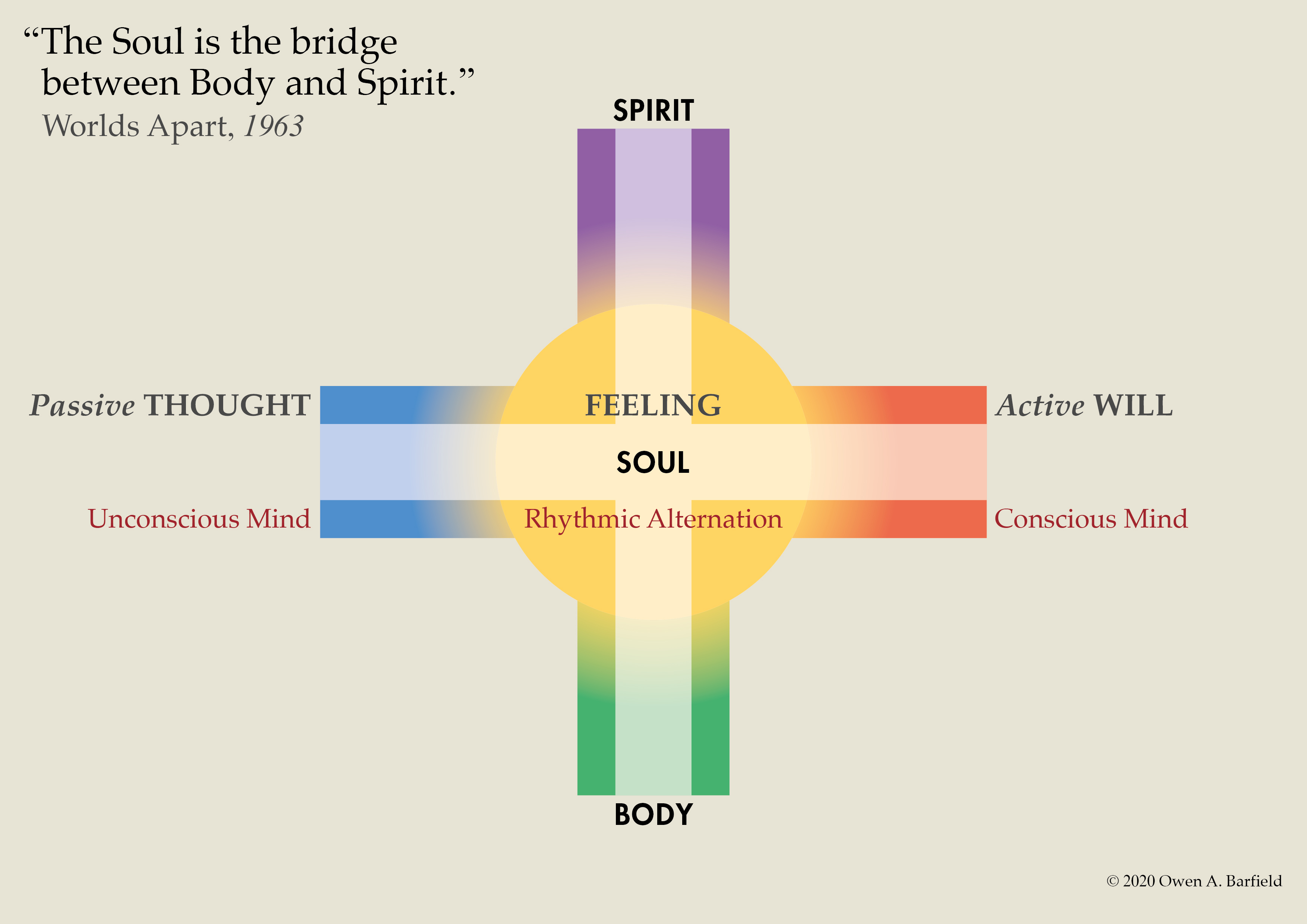
- To open our perception to this new way of thinking, we must understand the physical and mental processes involved in thinking
- The power of our imagination will allow us to evolve to this new way of thinking and will open a means for us to develop an expanded science.
* * * * * * *
Spirit: what is not matter, but what is required for matter to form.
Imagination: the bridge between matter and spirit
reconnecting to spirit, the living unity
accessing core morality.
Primary tools of the Imagination:
feelings
intuitions
will
intellect.
Participation and Consciousness
An extract from 'Immortal Diamond' by Richard Rohr, 2013:
“ Roughly before 800 B.C., it seems, most people connected with God and reality through myth, poetry, dance, music, fertility, and nature. Although it was a violent world focused on survival, there is much evidence that many people might have had healthier psyches than we do today. They knew they participated in what was still an utterly enchanted universe. This was the pre-existent “church that existed since Abel” that St. Augustine and St. Gregory spoke of. Barfield called this Original Participation.Consciousness emerged worldwide with the Eastern sages, the Jewish prophets, and the Greek philosophers, all around 500 B.C. It was the birth of systematic and conceptual thought. In the East, it often took the form of the holistic thinking that is found in Hinduism, Taoism, and Buddhism, which allowed people to experience forms of participation with reality, themselves, and the divine. In the West, the Greek genius gave us a kind of meditated participation through thought, reason, and philosophy.
On the cusp of East and West, there was a dramatic realization of intimate union and group participation with God among the people called Israel. The people were being saved; participation was historical and not just individual. The confluence of the Eastern Semitic mind, Jewish religion, and Greek and Roman influence in Palestine created a matrix into which a new realisation could be communicated, and Jesus the Jew soon offered the world full and Final Participation in his own holistic teaching, which allowed him to speak of true union at all levels.
Unfortunately the monumental insights of the period that formed all of us in foundational and good ways began to dry up and wane, descending into the extreme headiness of some Scholastic philosophy (1100 – 1500), the antagonistic mind of almost all church reformations, and the rational literalism of the Enlightenment. Although the reformations were inevitable, good, and necessary, they also ushered in the Desert of Nonparticipation, as Barfield called it, where no one belonged, few were at home in this world, and religion at its worst concentrated on controlling its own members.
Barfield, foresaw the coming of a new Consciousness, when the best of each era will combine and work together: the prerational, the rational, and the transrational. We live in such a time! In this consciousness, we can now enjoy intuitive and body knowledge, along with rational critique and deeper synthesis, thus encouraging both intelligent and heartfelt participation “with our whole heart, soul, mind and strength,” as Jesus puts it (Mark 12:30). ”
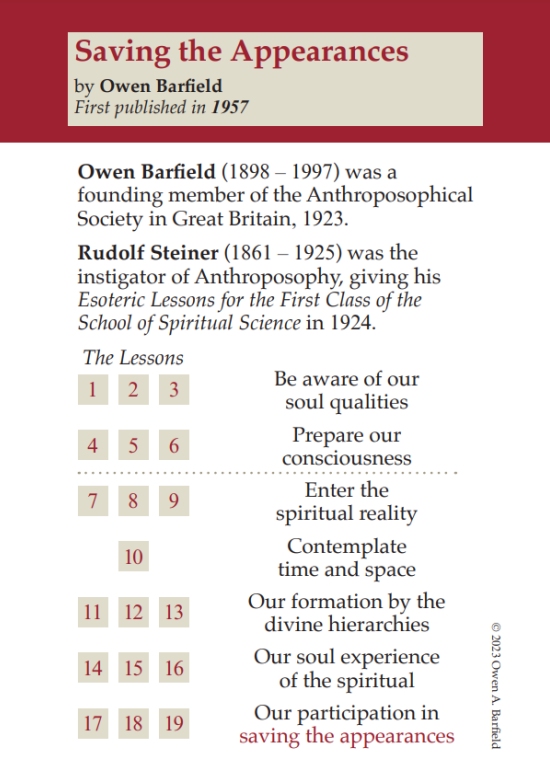
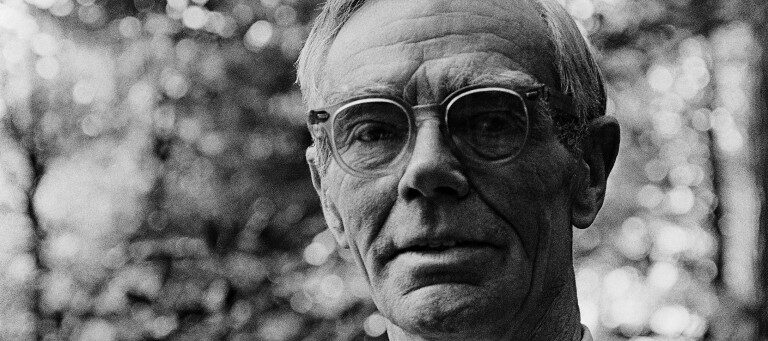
Owen Barfield (1898–1997) was one of the twentieth century's most insightful writers and philosophers. His ideas informed the thinking and writing of influential authors such as C. S. Lewis and J. R. R. Tolkien who were fellow members of the Inklings, an Oxford group of scholars.
As a leading anthroposophist in the English-speaking world, Barfield was especially interested in the evolution of human consciousness, exploring its development through the history of language.
Thinkers and writers central to Barfield's work include Johann Wolfgang von Goethe, Samuel Taylor Coleridge, and Rudolf Steiner. Although best known for his non-fiction, such as Poetic Diction and Saving the Appearances, Barfield also wrote poetry, fiction, and plays.
T. S. Eliot, W. H. Auden, Howard Nemerov, and Saul Bellow are among those who have praised Barfield's writing, and Barfield is often described as having a prophetic, powerful mind.